Day Return to Blaenau. 1st December 2014.
The station buildings at Llandudno Junction aren’t as interesting as some on the Chester-Holyhead line but its wide platform area is impressive.
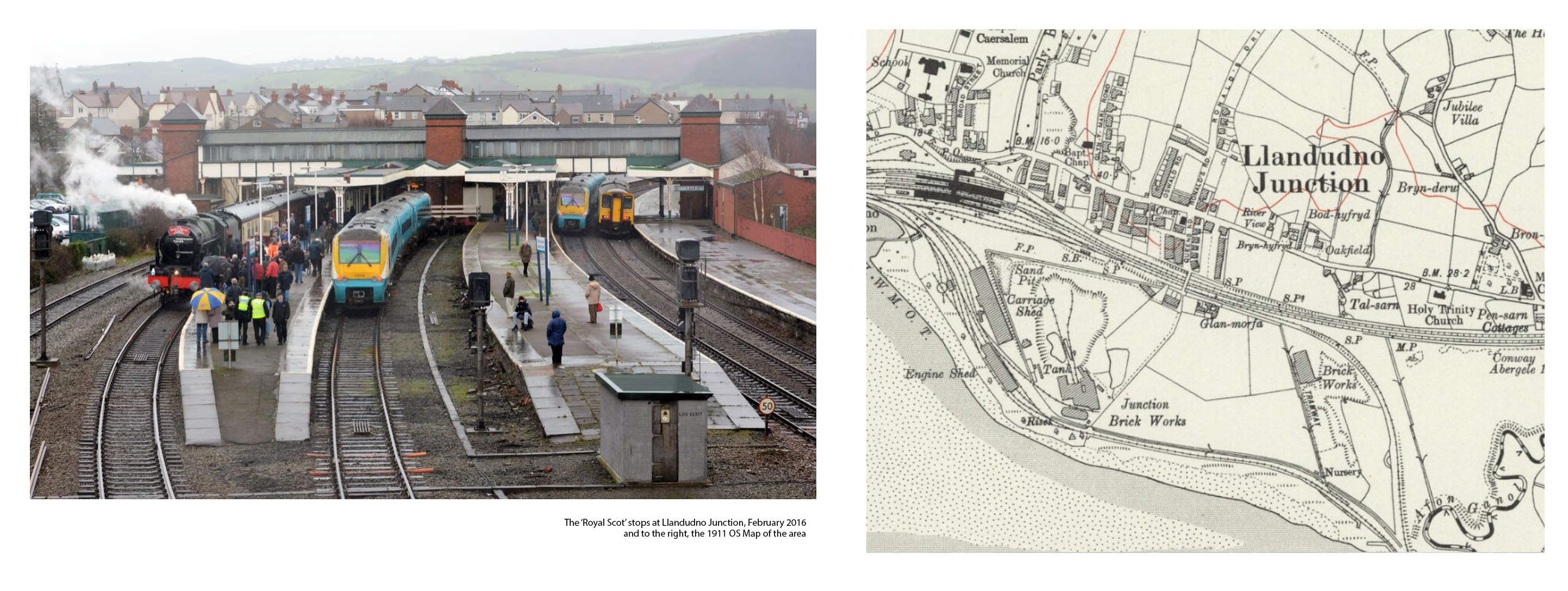 |
| At left, the Railway Station at Llandudno Junction with 'Royal Scot' on a charter train in February, 2016. At right, the 1911 OS Map showing the layout with the line left to Llanduddno & south along the Conwwy Valley. |
It remains the junction for two branch lines, one to Llandudno and the other the 27 mile Conwy Valley line to Blaenau Ffestiniog. The ride on the Conwy Valley line is a journey through dramatic scenery. A run alongside the estuary is followed, beyond Betws, by a steep and winding climb that culminates in a two mile tunnel under Moel Dymogydd from which the train emerges into the towering, grey, landscape of the slate workings that defined the town in its heyday and still do in its reincarnation as a tourist destination.
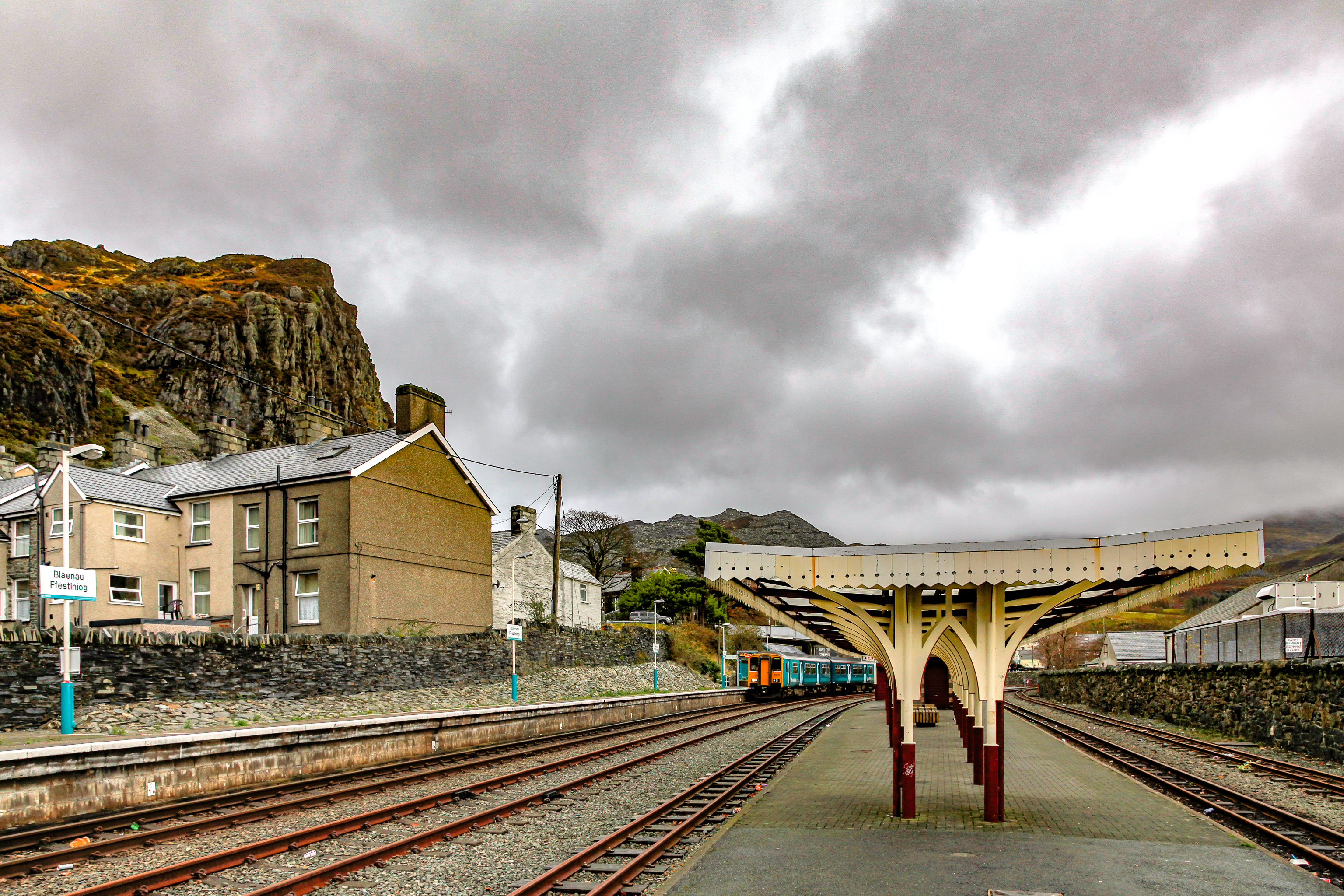 |
| The Railway Station at Blaenau Ffestiniog with a DMU local service approaching. |
The tourist industry is the main source of employment now in Blaenau Ffestiniog. This involves, importantly, the Llechwedd slate caverns and in the summer months the town is a busy railway centre. The narrow guage Ffestiniog Railway runs up from Porthmadog and there are various excursions on the Conwy Valley line. Some £4.5 million pounds is being spent on the town centre to create “a vibrant shopping centre” (Wickipedia). The area near the station has been cleaned up, a new bus station has been created, incorporating an early Ffestiniog Railway building, 40 foot high slate structures have been erected to celebrate that industry and there is a plinthed locomotive with two slate wagons.
We arrive in the the town just as the rain starts to fall but set off down Church Street passed the (Kurdish) ‘artisan bakers’ and, as the rain rapidly increases in intensity, dive into De Niro’s café.
.png) |
| A recent Google Earth view of De Niro's Cafe on Church Street. |
Sue, serving us bacon sarnies, has been in Blaenau for thirty years but her Lancashire accent remains definite. The chef’s voice from the kitchen was clearly tutored in London and, as Andy and I are both exiles from the South, we discuss its exact location, settling on Tottenham. Accent remains an enduring product of the places we grow up for many of us.
One aim of the day was to walk the line of the former Great Western Bala to Blaenau railway, see folowing map-
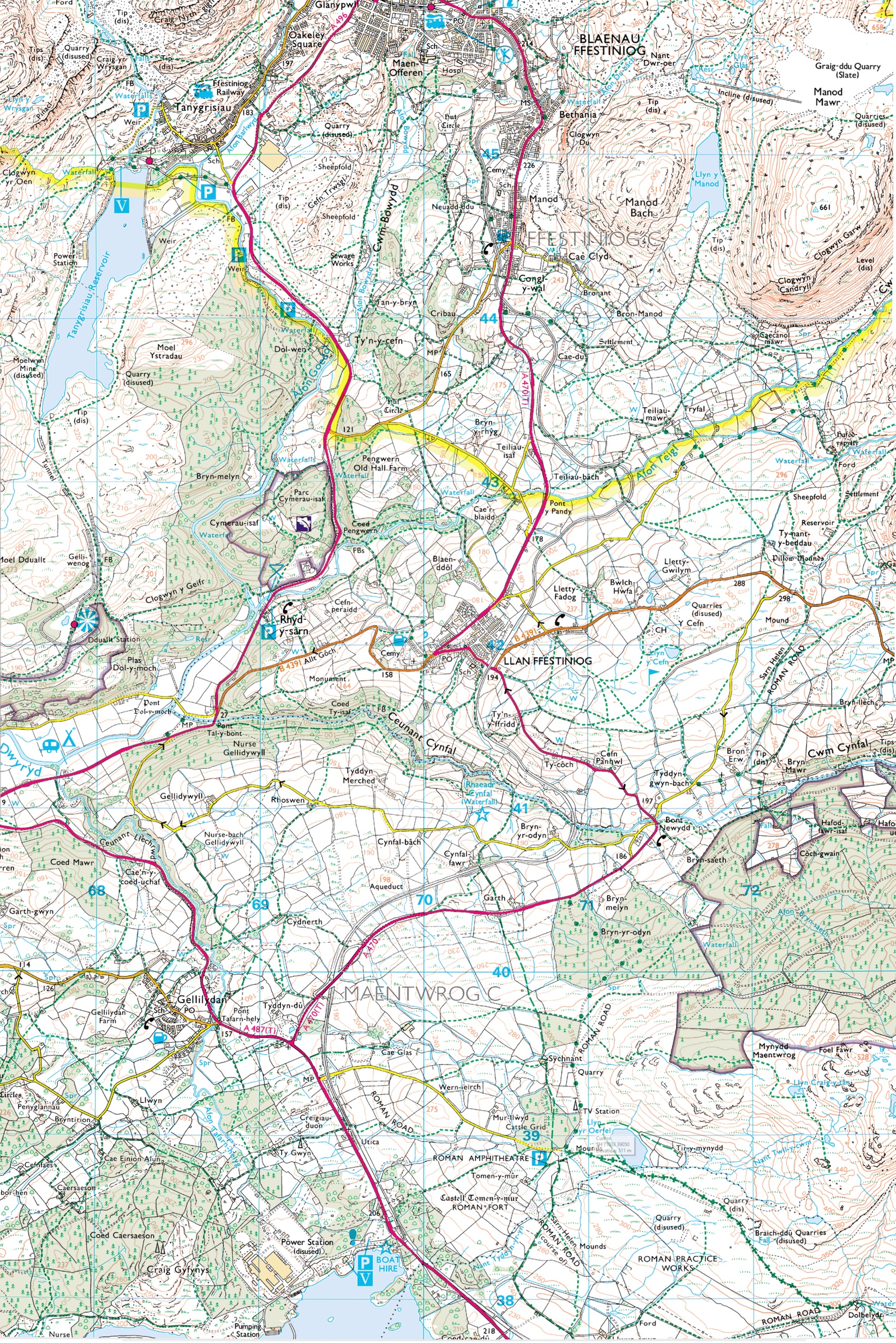 |
| The route of the 27 mile Conwy Valley line from Blaenau Ffestiniog and then on south to Trawsfynydd(OS Map). |
This track, in recent years, has run only between Blaenau and the Trawsfynydd nuclear power station. We had explored the section from Cwm Prysor to Trawsfynydd last year.
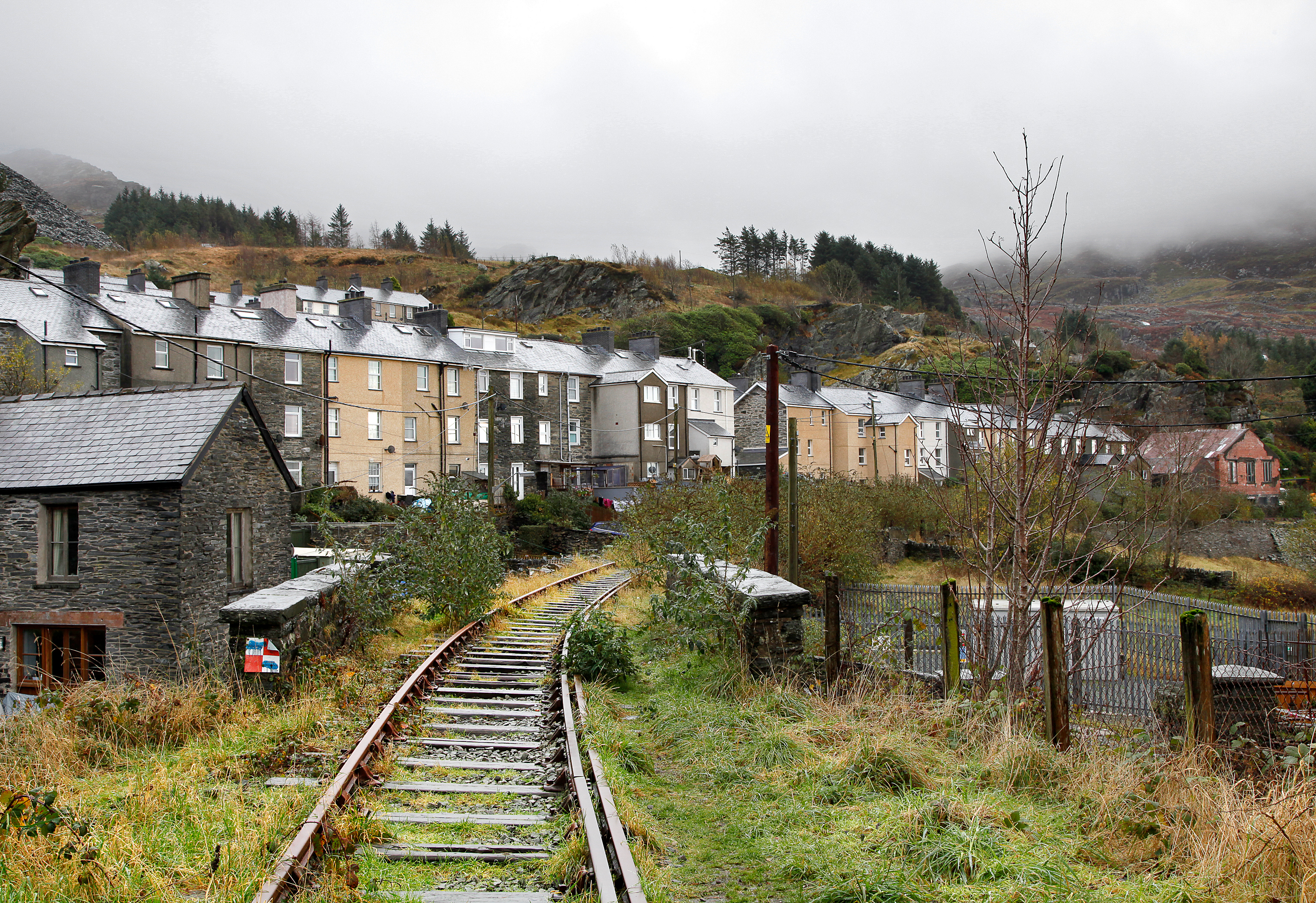 |
| The start of the track south as far as Trawsfynydd, beyond there, the track has been lifted though the trackbed was/is still walkable. |
The UK is commissioning a new generation of expensive, in all senses, nuclear plants. You don’t need a Chernobyl, a Three Mile Island or a Fukushima to be cautious. Typically no-one, it seems, properly considered what decommissioning Trawsfynydd would involve. The nuclear power station there was commissioned in 1965 and decommissioning began in 1991. The railway was retained to transport waste to storage at Sellafield. Today it’s a spooky place, quiet except for strange gurglings as, I imagine, waste water from the power station empties into the reservoir, and it’s impossible to ignore the fact of the nuclear waste inside the buildings that can’t be moved for a century.
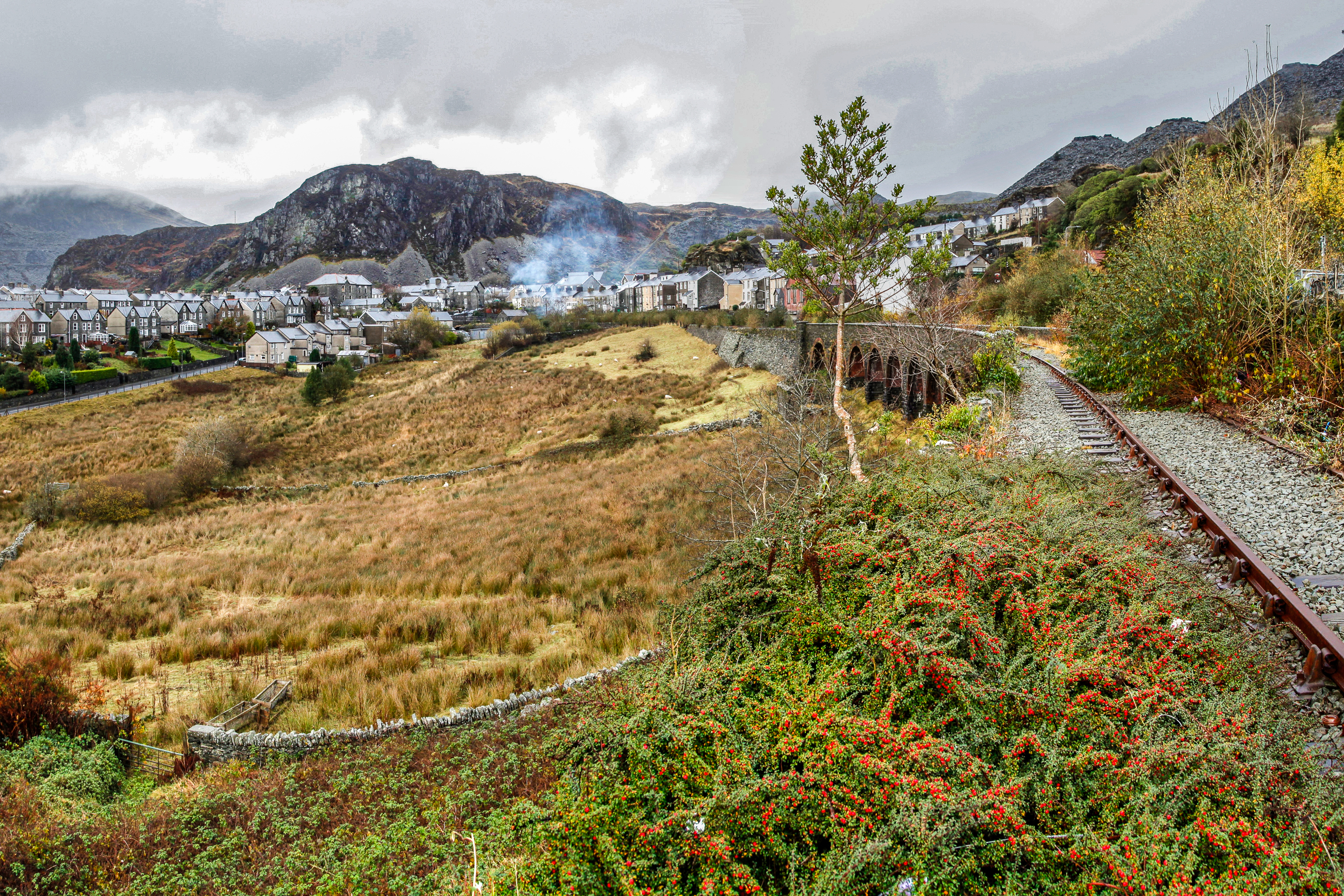 |
| A view taken just outside Blaenau which shows the Tan-y-Manod Viaduct at right and the impressive hill above Blaenau in the left background, which is the rocky outcrop of 'Garreg Ddu'. |
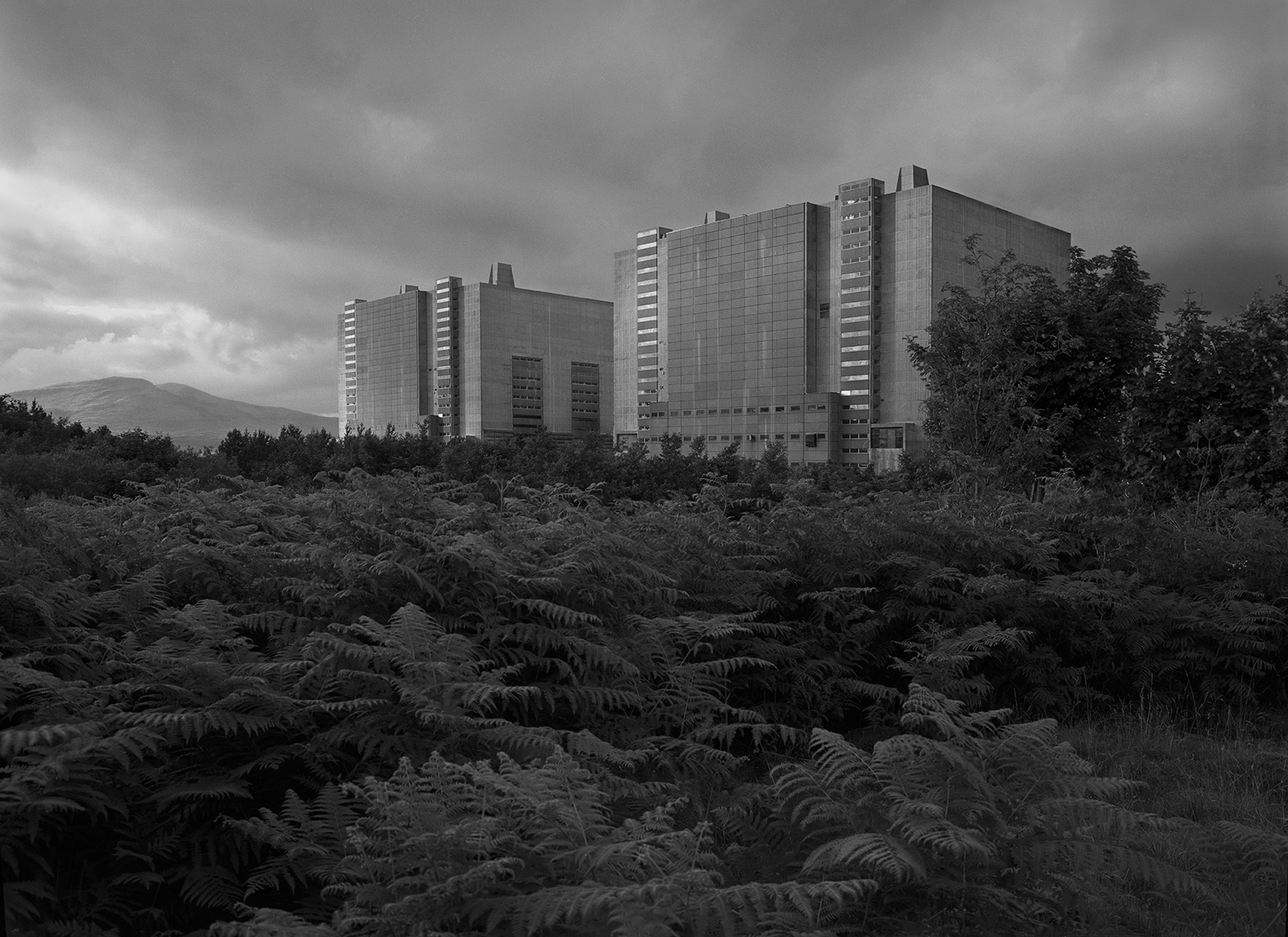
Trawsfynydd isn’t defined by the power station, it’s a beautiful place and great for walking, but the power station is an inescapable part of it. Can that legacy be turned into Heritage as, say, Blaenau Ffestiniog has done with the slate industry? The power station buildings were designed by celebrated Modernist Sir Basil Spence and there is a school of thought that it represents an important contribution to British Brutalism. It’s true that photographed from a certain angle in dramatic light that they look impressive. Here is Berris Conolly giving them the full Romantic treatment.
Though from one of the official viewpoints on an overcast day they look rather more prosaic.
|
| The decommisioned, 1991, Trawsfynydd Nuclear Power Station, seen in 1986 (Berris Conolly). |
If the magic wand of Heritage is to be waved over Trawsfynydd then it seems likely that the railway will play an important part in that process and it would not be surprising to me to see it reopen in some form. It was reballasted in 1993 and, superficially at least, it looks as though clearing the vegetation and the debris would allow trains to run, though we didn’t walk the whole length of the line.
Walking back to Blaenau Ffestiniog and a few shafts of low-wattage sunlight pick out the terrace housing beneath the spoil tips and the heavy sky.
We both pause,
“Dramatic” says Andy, who is an accomplished artist.
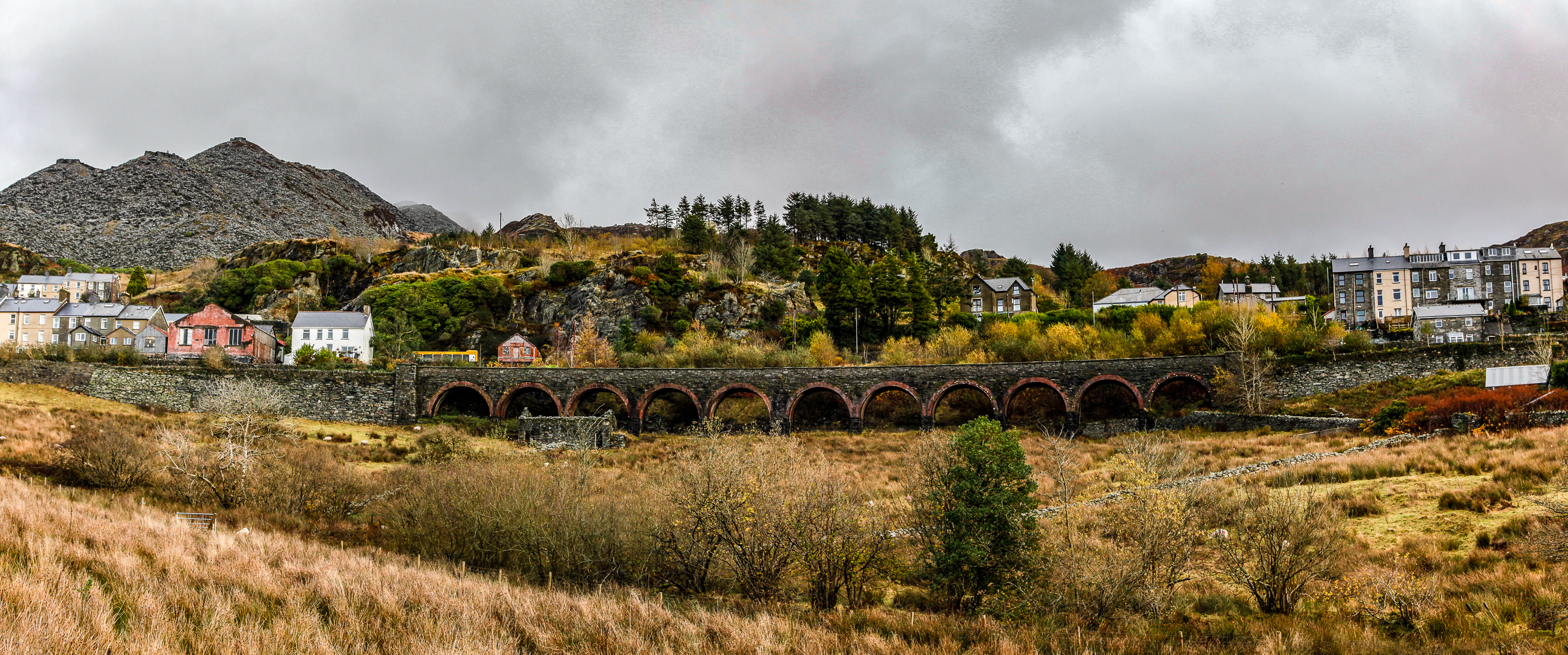 |
| This view shows the track crossing the Tan-y-Manod Viaduct with Blaenau's slate hills in the background. The track heads south, to the right as far as Trawsfynydd, but has been lifted beyond there, the route was/is still walkable from there to Cwm Prysor. |
Me :“I wonder if it’s a photograph..bit of a cliché..”
Andy: “All photographs are cliché.”
I put the camera away. What Andy means, I think, is that the fixed point of view and perspective makes photographic images tend towards the generic. He’s right, in a way; it’s the price we pay for such perfect mimesis.
We fall back into discussion of the railway history as we approach the viaduct at Tan-y-Manod, but it’s difficult not to imagine those nuclear flasks being shepherded down the line at 15 mph on their way to Cumbria
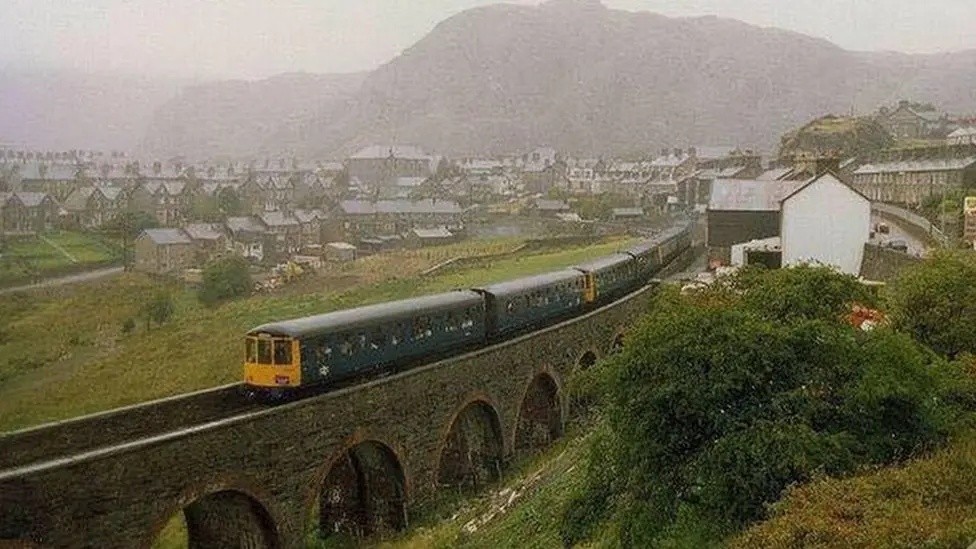 |
| This view shows the same viaduct but now taken in the 1950's with B.R. Blue liveried class 104 DMU, passing over, heading south to Bala. |
Back in Blaenau, and on our way to the station for the Llandudno train, we pass a couple of young men parked up in a black BMW. The lad in the passenger seat is rolling up a spliff . He winds the window down and shouts at Andy, a pensioner like myself, “You an undercover cop?”. Andy laughs and walks on. Behind him the lad is yelling “undercover cop…undercover cop..” to the empty car park.
Not a lot of strangers on the streets of Blaenau Ffestiniog on a wet November day, I’m guessing..
Caernarfon. 26th June 2019.
I went to North Wales last week principally to see some friends but also for the Welsh Highland/Ffestiniog 'Past, Present and Future' festival. It seemed like it was a great success, I certainly enjoyed it, and I hope they made a load of money from it.
From what I understand the WHR is happy to regard itself as a tourist attraction but not necessarily as a 'Heritage' railway; transport through the Snowdonia National Park rather than somewhere to run steam engines (though of course they do).
Perhaps that's illustrated by the design of the new Caernarfon station building which the railway describes as 'looking to the future'. It certainly stands out in its setting where there is little significant new-build, and there were no original railway buildings on the site to replicate even had they so wished.
The interior space looks like it works well and obviously gives the railway what it needed in terms of ticket office, gift shop and cafe. The exterior is pleasing from the castle direction but, facing the harbour, the blank wall clad in bright metal I find harder to like. I expect I'll get used to it.
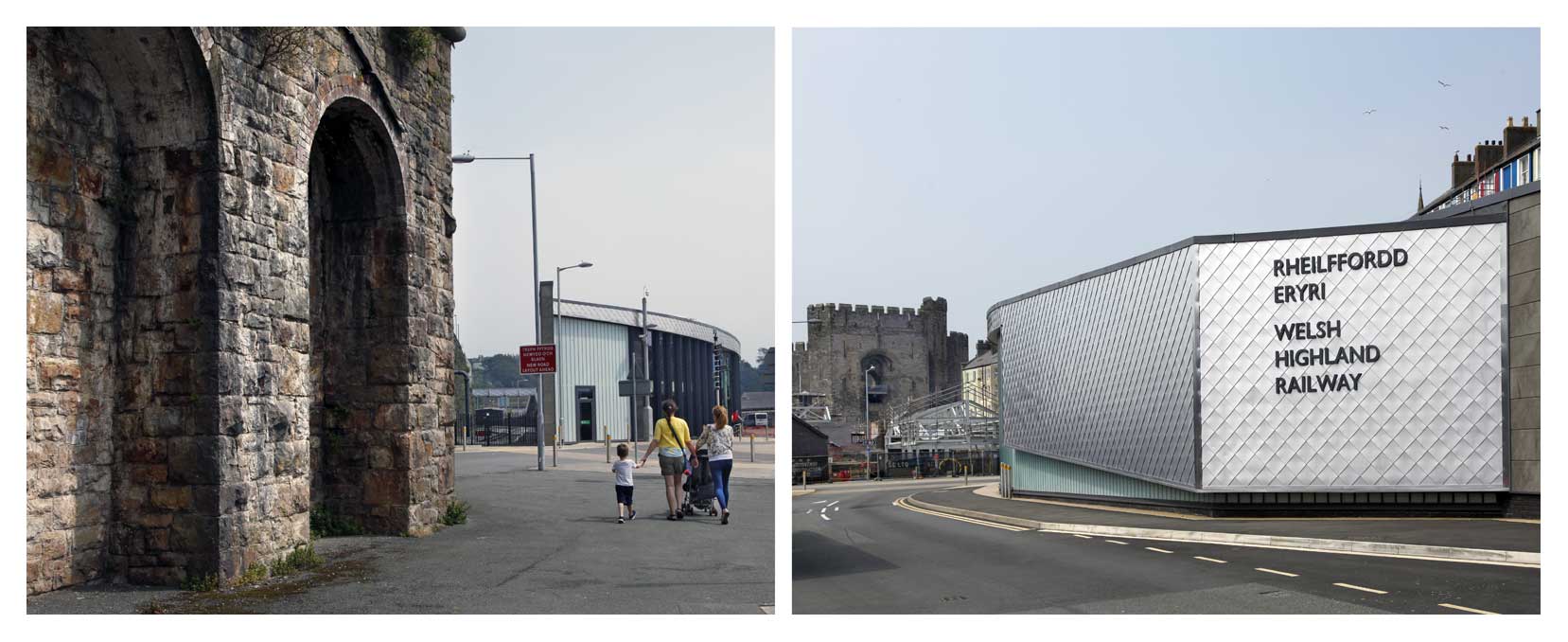
|
| The Railway Station at Caernarfon, 26th June, 2019. |
In the picture above:
On the left is the view looking to the entrance to the new station with the arches that flanked the closed London and North Western Railway line, on which trackbed the WHR station now sits, to the left of picture.
The right hand photo shows the wall that encloses the exit from the platform.
Merthyr Tydfil 1966. 27th October 2016.
There is pretty much no photograph that I don't find interesting in some way. Old or new, good, bad or ugly there is something in the photographic rendering of the world, its archiving of the mundane, that fascinates. Quite why that is I'm not sure but in part, perhaps, it is because I think that there is no such thing as an 'ordinary' life, that all life is remarkable in some way. Or, maybe, that all life is 'ordinary' even under the most exceptional circumstances of triumph or tragedy..
Be that as it may...over the last few years I've been collecting various photographic images, largely amateur and the kind of things that might have been thrown away until fairly recently and the current era of collecting manias, car boots and ebay sales.
These four images come from a couple of rolls of 35mm film that I think were shot by a schoolteacher in Merthyr Tydfil in 1966.
I don't know much about Merthyr. My grandparents lived there in the early 1950s but I was too young to remember any visits my family might have made there. I knew something of the Taff and the other Welsh valleys in the 1960s as part of my enthusiasm for steam locomotive depots and industrial railways - journeys, I am sad to say, undertaken with only the sketchiest appreciation of the people and landscape around me.
The photographs here look like they all relate to the summer of 1966. Some of the pictures are of the end of term at school - a performance with the girls in traditional Welsh costume, though the stage backdrop looks more Alpine than the valley sides of the Taff-
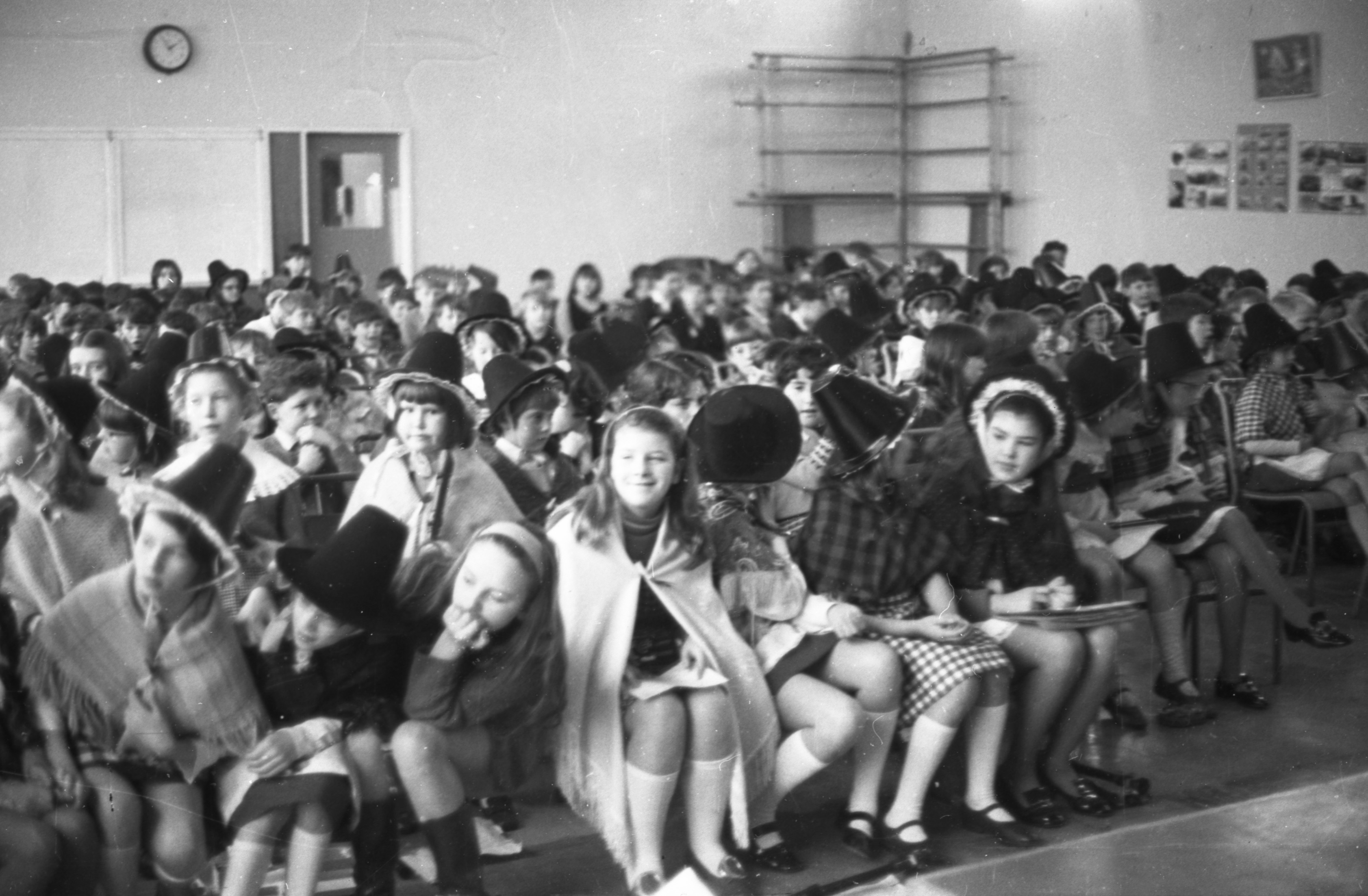
|
| Merthyr School, Assembly Hall, at 5 minutes to 2 children distracted by something on their right, 1966. |
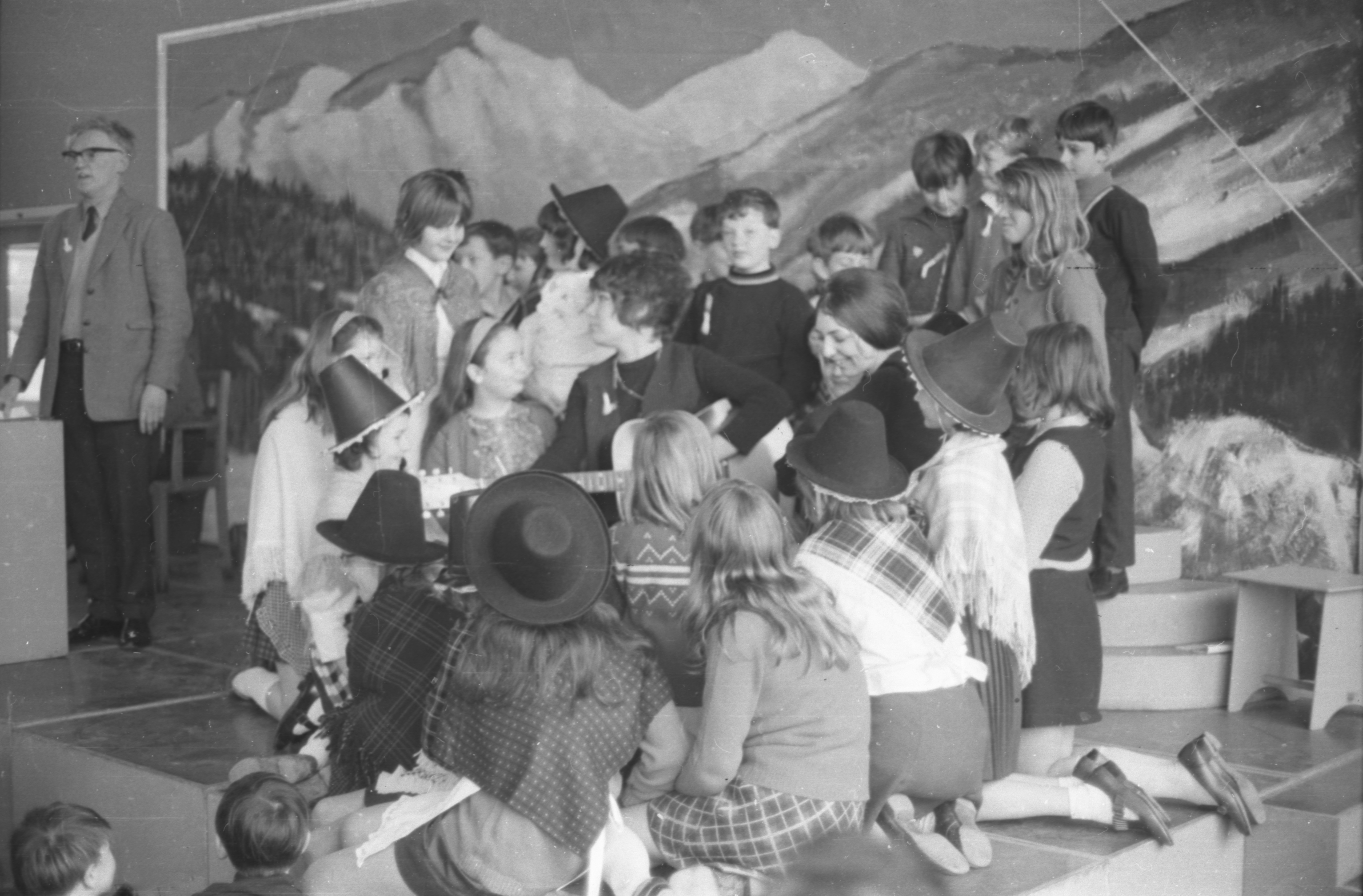
|
| Panorama, of Snowden? at the back with the assembled school children now congregating for some activity, 1966. |
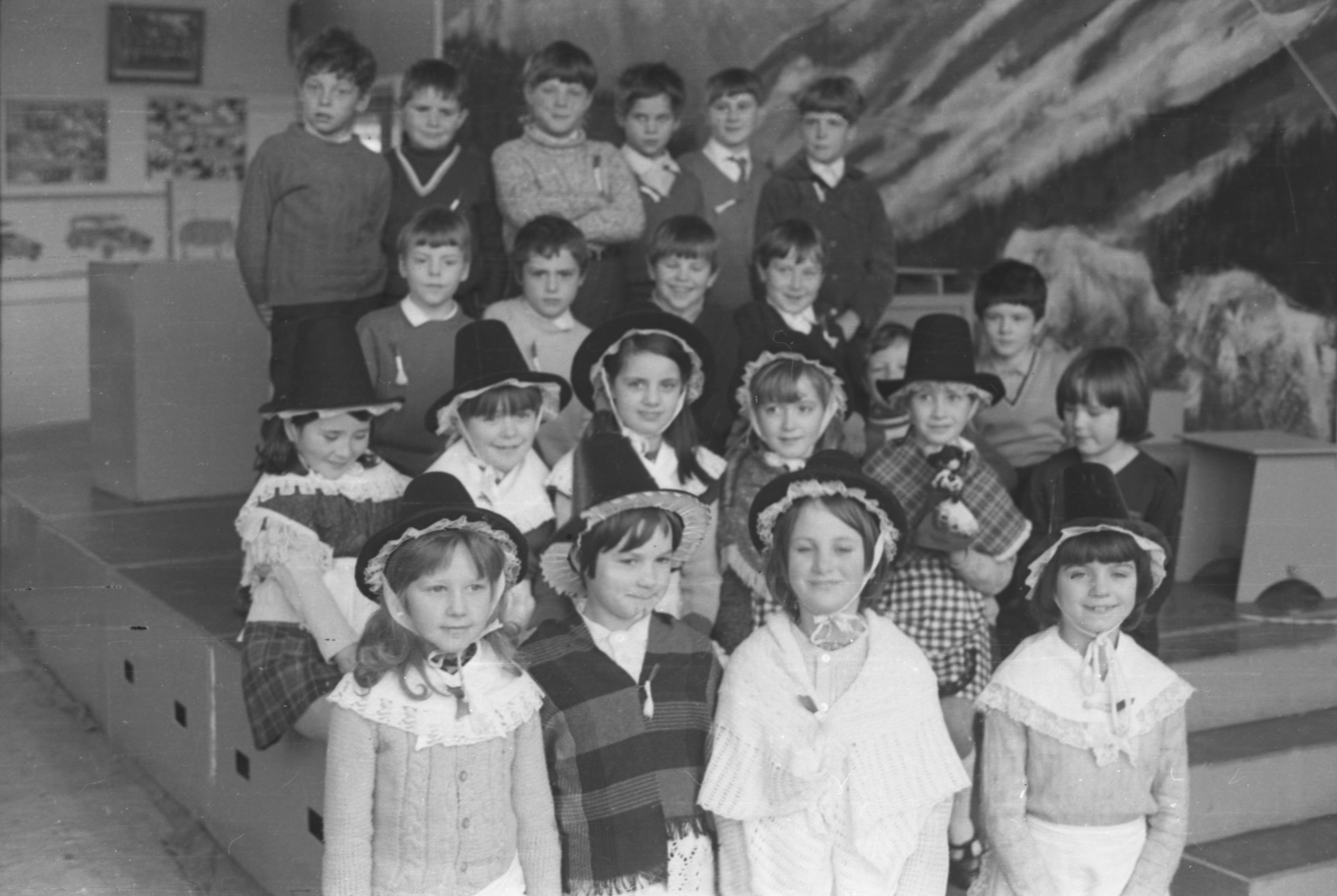
|
| Assembled school children in rows wearing traditional Welsh dress, continuing activity, 1966. |
These are followed by a trip out to the local railway goods depot, some of the boys clutching their spotters' notebooks. See these pictures of that area here in the 1950s-
Plymouth Street, Merthyr.
and a more general web page with many photo resources-
Old Merthyr Tydfil Photographs.
Also on the film are scenes from what looks like a family summer holiday in Pembrokeshire and at the end are some scenes in a local pub including images from the television screen in the bar. The television is showing the Royal opening of the Severn Bridge on September 8th 1966, shortly after the start of the new school year-.
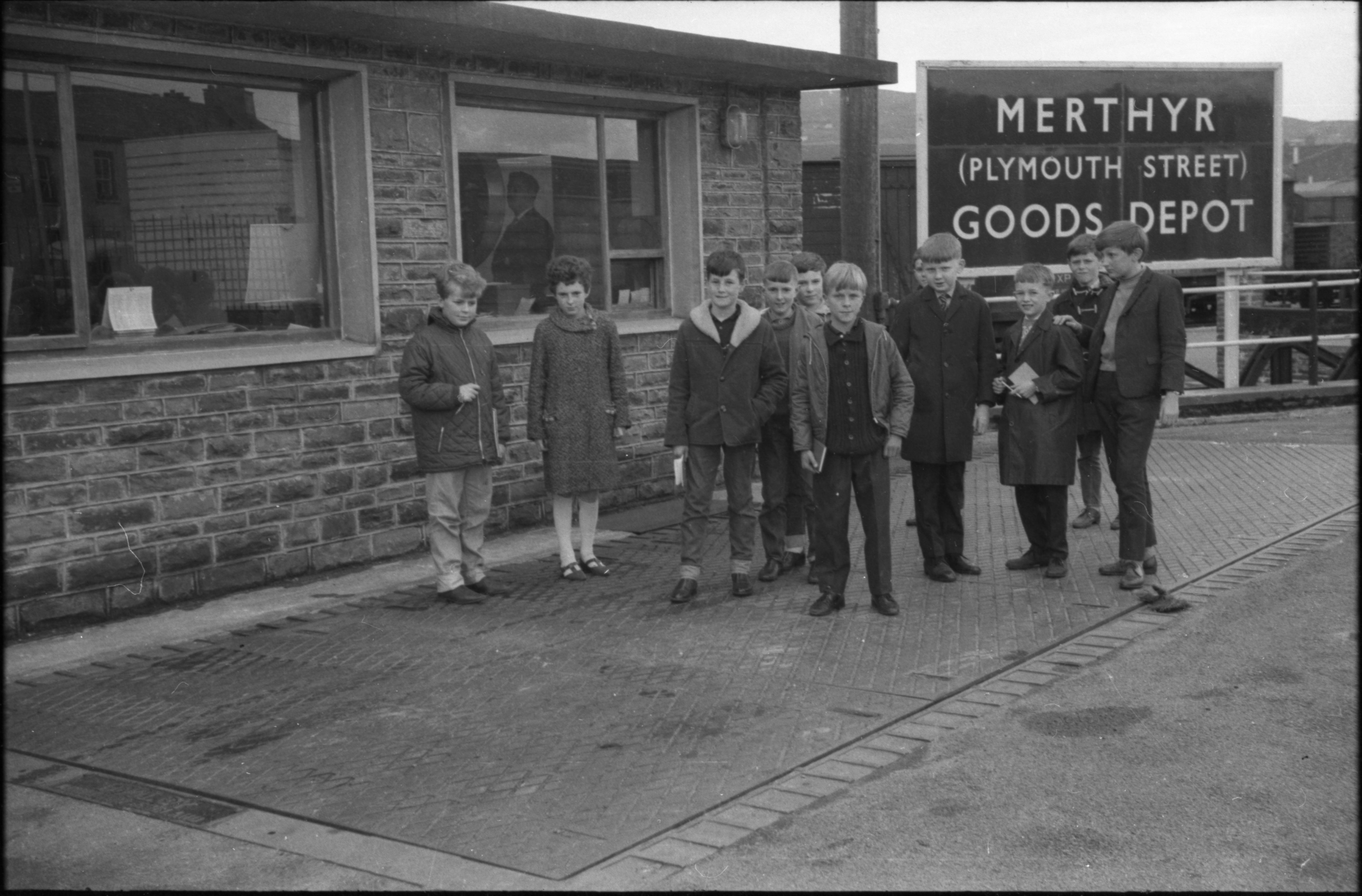
|
| The Railway Station at Plymouth Street Goods Depot, with school attendees, 1966. |
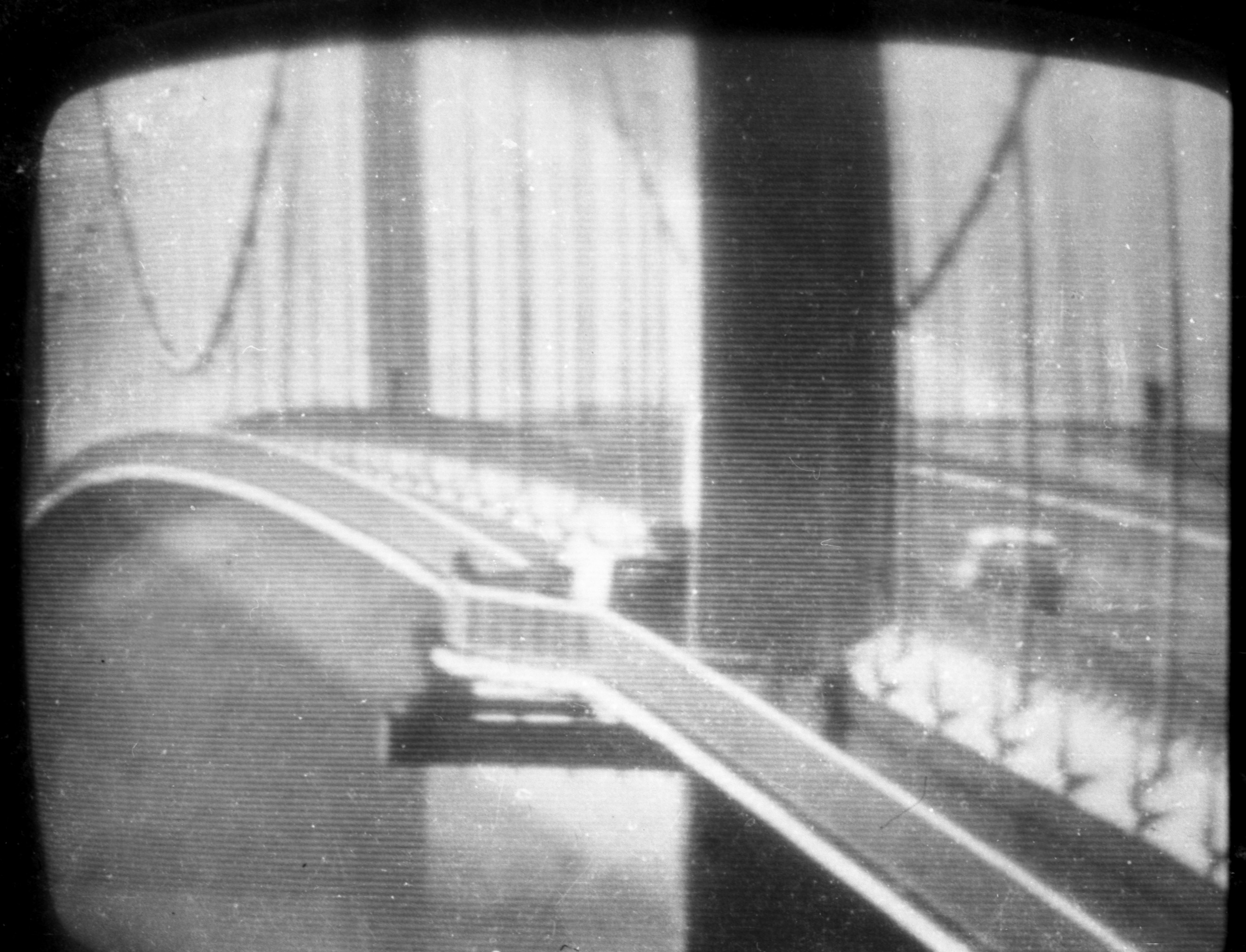
|
| A view taken off a TV screen, of the Royal opening of the new Severn Bridge, September 8th 1966. |
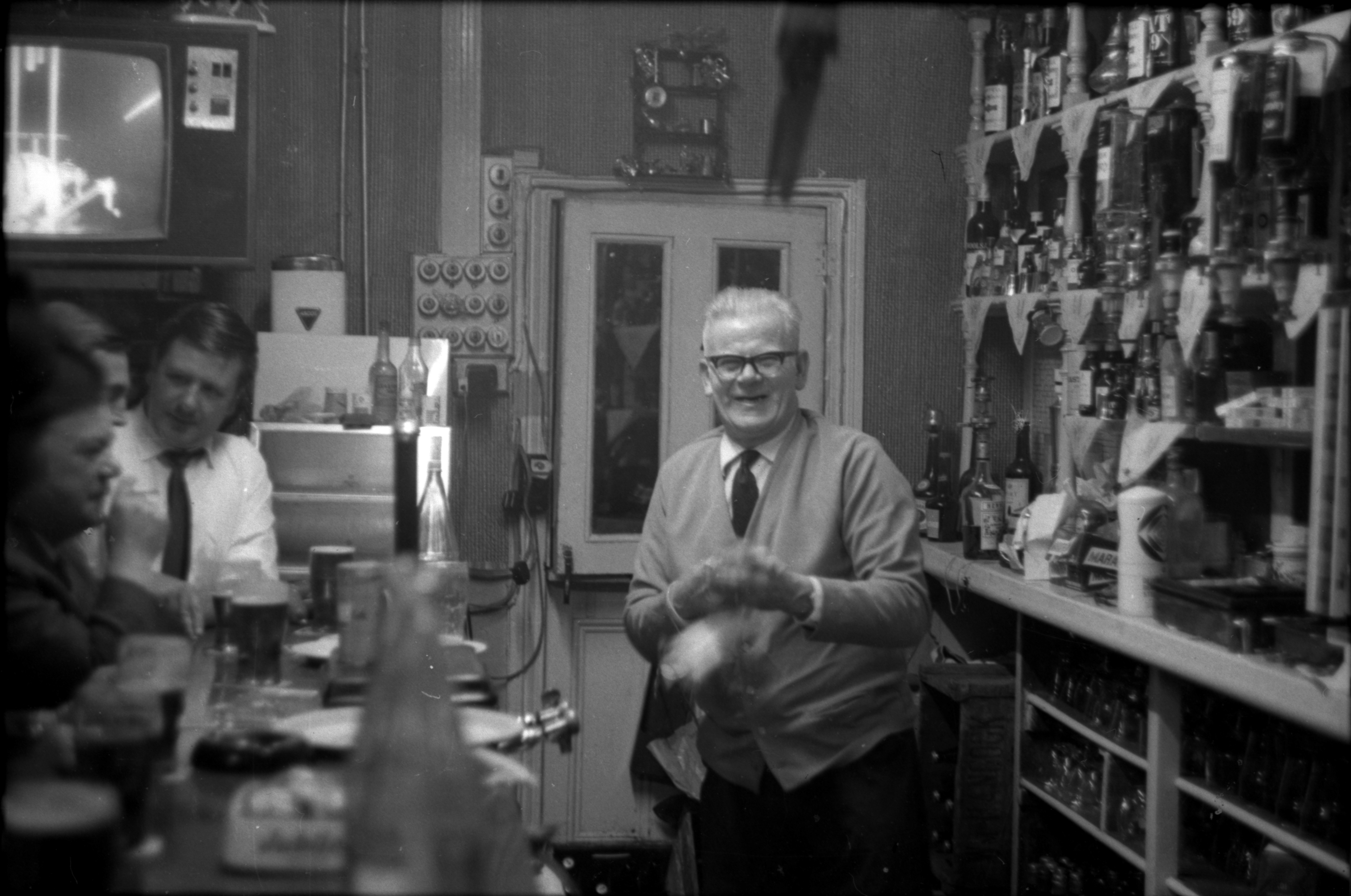
|
| The local pub in Merthyr, with B/W 405-line TV on in background, 1966. |
A few weeks later, 21st October 1966, a few miles down the valley at Merthyr Vale Colliery, the spoil tip collapsed and crushed the Pantglas Junior School at Aberfan burying alive over a hundred of the children and adults inside, see-
Aberfan Disaster, 1966.
It's fifty years since these photos were taken and my guess is that, for whatever reason, they were not printed. It seems like a good time for them to see the light...
Adrian Wynn, 27th October, 2016, almost 10 years ago.
If I were to make an inital comment about the above, I would say there is a possibility that the pictures shown here bear somewhat on the awful circumstances which were about to unfold at Merthyr Vale Colliery. Were the children, shown above at school, the ones who may have been involved in the disaster, is this in fact the school which succumbeed to that awful event? Probably not but it is worth pondering, unless someone knows differently.. Is this school recognised by anyone?, there are many images at the link above taken around Plymouth St., though none in 1966...
I am happy to be trying to fulfill Adrian's wishes and as we approach the 60th anniversary of the Aberfan Disaster, it seems fitting to do this now, APO, 5th September, 2026.
Views in Camera
Comments or information about Adrian's work please e-mail
Dr. A. Oates
Visits